Drawing a Line of Best Fit
Recall
A line of best fit will always follow the trend of the data.
One way to identify if there is a trend to the data is to draw an elliptical enclosure around the data.
If the ellipse we draw is more round, or close to being circular, this is an indication that there is no trend and we cannot draw a line of best fit to represent the relationship between the two variables. We can say there is no correlation between the variables.
The more elongated and narrow the ellipse, or the closer it is to being flat, the stronger the relationship, or correlation. If this is the case, we can use a ruler and draw a line of best fit to represent the relationship.
Scatter Plot 1: Jersey Number vs. Player Weight
Let's consider a scatter plot of basketball player jersey numbers (the dependent variable) with respect to their weight (the independent variable).
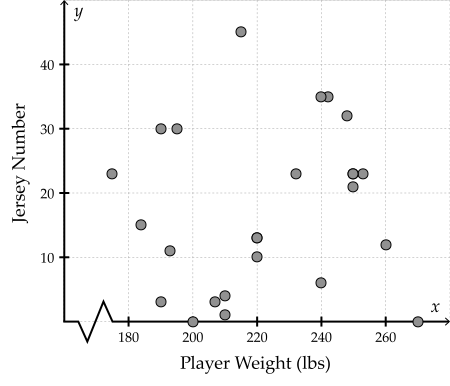
If we enclose the data in the smallest possible ellipse that conatins all of the data points, we get:
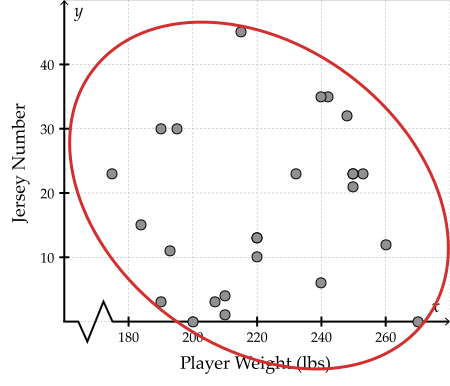
Our ellipse is close to being circular, which shows that there is no trend or relationship between a player's jersey number and their weight. Therefore, we will not draw a line of best on this scatter plot.
Scatter Plot 2: Hot Drink Sales vs. Temperature
Let's consider a scatter plot of the sale of hot drinks with respect to air temperature.
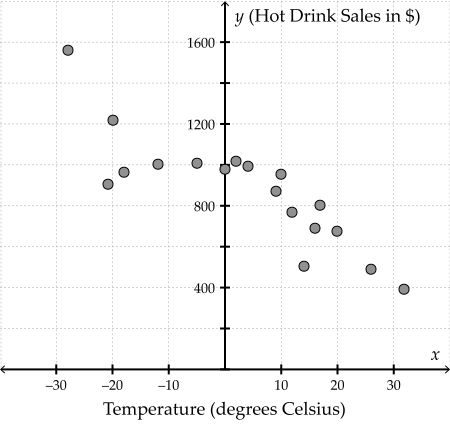
If we enclose the data in the smallest possible ellipse that contains all of the data points, we get:
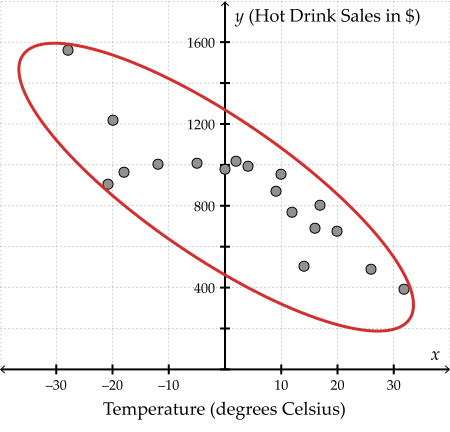
Our ellipse on this graph is narrower and we can see that there appears to be a trend or relationship between the two variables. The data shows a strong negative correlation.
Although the key idea when drawing a line of best fit is to follow the trend of the data, there are some additional recommendations to keep in mind:
- The line of best fit should pass through as many points as possible, but we should try to pass through a minimum of two points. (Note: "Passing through" the point means that the line of best fit visually touches the point on the graph. Mathematically, this means that the distance between the point and the line is a very small value, ideally zero.)
- The number of remaining points should be split close to equal on either side of the line.
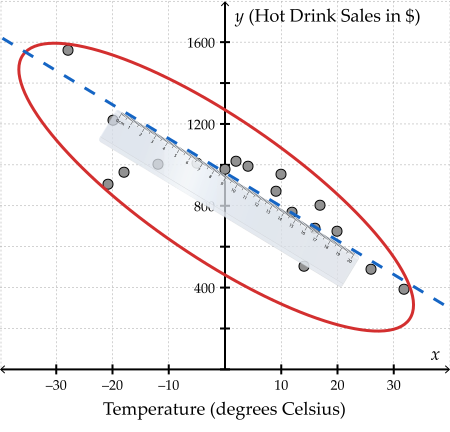
Source: Ruler - Laurent Renault/Hemera/ThinkStock
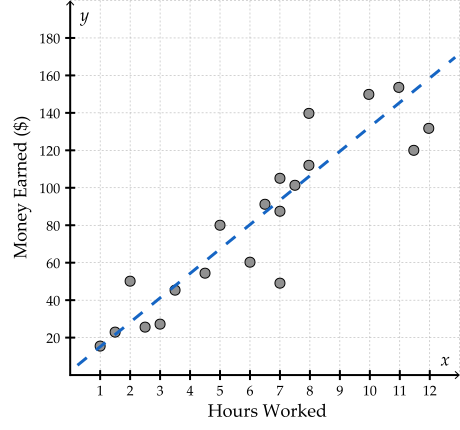
Our line of best fit passes through four points and has an equal number of points above and below it. (Recall from above: "Passing through" the point means that the line of best fit visually touches the point on the graph. Mathematically, this means that the distance between the point and the line is a very small value, ideally zero.)
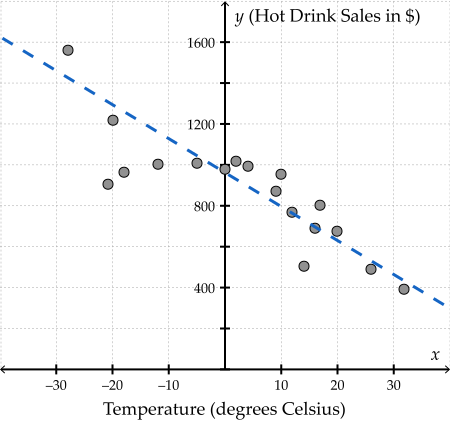
When lines of best fit are drawn by hand, it is important to note that there are many slightly different lines that can be drawn to represent the data. It is unlikely than any two individuals would draw exactly the same line of best fit.
For Scatterplot 2, any hand drawn lines of best fit should still reflect a negative correlation in order to correctly follow the trend of the data.
Scatter Plot 3: Money Earned vs. Hours Worked
Let's consider a scatter plot of money earned with respect to hours worked.
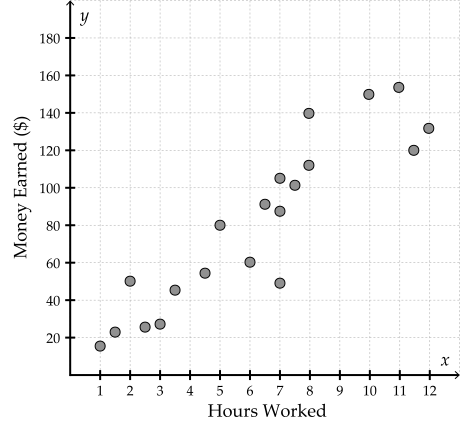
If we enclose the data in the smallest possible ellipse that contains all of the data points, we get:
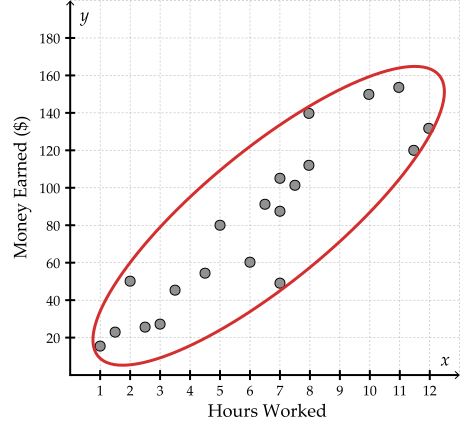
We can see that there appears to be a trend or relationship between the two variables. We can then draw a line of best fit.
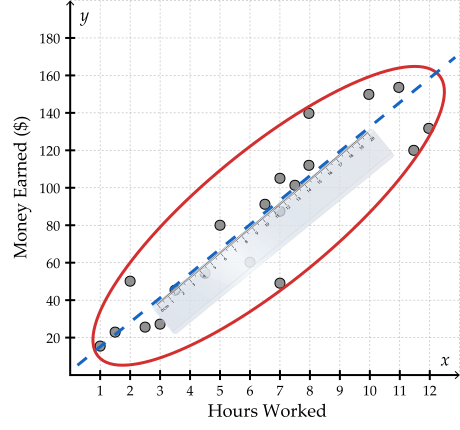
Source: Ruler - Laurent Renault/Hemera/ThinkStock
We can see the data shows a positive correlation and therefore our line of best fit has a positive slope.